

5-Amino-1MQ 50mg
£59.99 GBP
Skip to product information
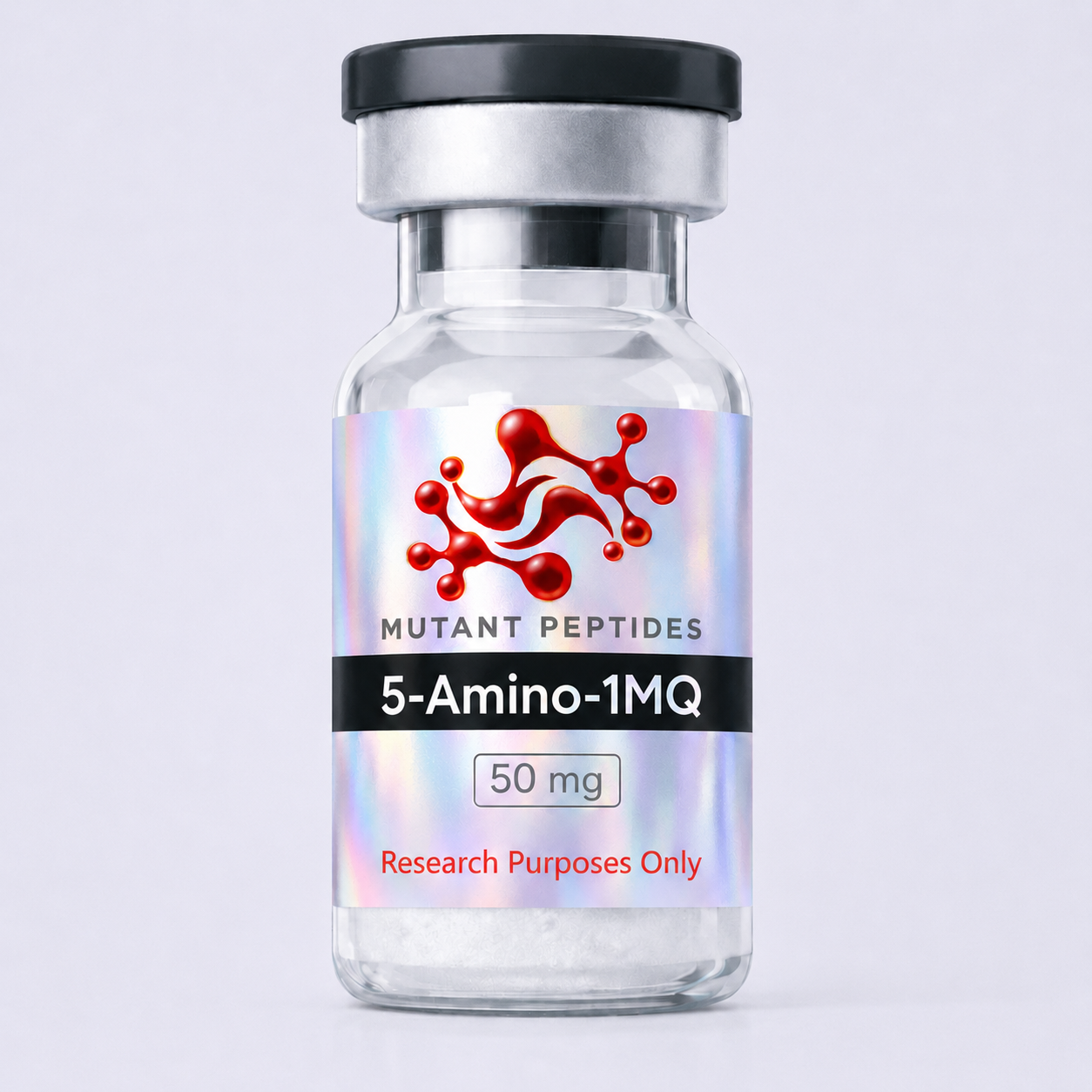

5-Amino-1MQ 50mg
£59.99 GBP

5-Amino-1MQ 50mg is a synthetic small-molecule compound designed for research and laboratory use. This high-purity formulation delivers 50 milligrams of 5-Amino-1-methylquinolinium, a selective inhibitor of nicotinamide N-methyltransferase (NNMT), suitable for scientific investigation and experimental applications. Each vial is manufactured to exacting standards to ensure consistency and reliability in research settings. Ideal for qualified researchers and institutions exploring metabolic regulation, NAD+ pathway modulation, and related biochemical studies. Store in a cool, dry place away from direct light. For research purposes only.
Specifications: Active Ingredient: 5-Amino-1-methylquinolinium (5-Amino-1MQ) Concentration: 50mg per vial Purity: Research-grade Format: Lyophilized powder Storage: Cool, dry environment, 2–8°C (refrigerated) Shelf Life: Refer to batch documentation for expiration details Intended Use: Laboratory and research applications only Quality Standard: Manufactured to pharmaceutical-grade consistency protocols Suitable for qualified researchers, academic institutions, and licensed laboratories conducting metabolic and NAD+ pathway research.
Molecular Formula: C₁₀H₁₁N₂⁺ (as cation) Molecular Weight: 159.21 g/mol (free base) CAS Number: 1220-83-3 Mechanism: Selective inhibitor of nicotinamide N-methyltransferase (NNMT), an enzyme involved in the methylation of nicotinamide and regulation of NAD+ precursor availability and cellular energy metabolism Sequence Classification: Small-molecule quaternary ammonium compound Purity Analysis: ≥98% by HPLC This molecular data supports advanced research into NNMT inhibition, NAD+ biosynthesis pathways, adipogenesis, and metabolic homeostasis studies.
Storage Before Reconstitution: Store the sealed vial at 2–8°C (refrigerated) or at room temperature (15–25°C) in a cool, dry place away from direct sunlight and heat sources. Keep in original packaging to protect from light exposure. Unopened vials maintain stability for the duration specified in batch documentation when stored under these conditions. Storage After Reconstitution: Once reconstituted with sterile water or appropriate diluent, store the solution at 2–8°C (refrigerated). Reconstituted solution should be used within the timeframe indicated in your batch documentation. Avoid repeated freeze-thaw cycles, which may compromise compound integrity. Keep the vial upright and away from direct light during storage. General Handling: Maintain sterile technique during reconstitution. Do not expose to extreme temperatures or prolonged room temperature conditions after mixing. For research use only. Not intended for human or veterinary use.
Research References
The following peer-reviewed studies and publications are provided for informational and scientific reference purposes only. They do not constitute medical claims or endorsements of this product for any therapeutic use.
-
NNMT Inhibition and Adipogenesis
Kraus D, et al. (2014). Nicotinamide N-methyltransferase knockdown protects against diet-induced obesity. Nature, 508(7495), 258–262. https://doi.org/10.1038/nature13198
Demonstrates that NNMT activity regulates adipogenesis and energy expenditure in murine models, establishing NNMT as a key metabolic enzyme target. -
5-Amino-1MQ as a Selective NNMT Inhibitor
Neelakantan H, et al. (2018). Selective and membrane-permeable small molecule inhibitors of nicotinamide N-methyltransferase reverse high fat diet-induced obesity in mice. Biochemical Pharmacology, 147, 141–152. https://doi.org/10.1016/j.bcp.2017.11.007
Identifies 5-Amino-1MQ as a potent, cell-permeable NNMT inhibitor and evaluates its effects on adipocyte differentiation and metabolic markers in vitro and in vivo. -
NAD+ Precursor Availability and Cellular Metabolism
Cantó C, et al. (2015). NAD+ metabolism and its roles in cellular processes during ageing. Nature Reviews Molecular Cell Biology, 16(7), 397–408. https://doi.org/10.1038/nrm4025
Reviews the role of NAD+ biosynthesis pathways — including the nicotinamide salvage pathway modulated by NNMT — in cellular energy homeostasis and ageing. -
NNMT Expression in Metabolic Disease
Pissios P, et al. (2013). Nicotinamide N-methyltransferase is regulated by fasting and liver X receptors. Biochemical and Biophysical Research Communications, 430(2), 614–619. https://doi.org/10.1016/j.bbrc.2012.11.095
Examines NNMT regulation in hepatic tissue and its relationship to fasting states and lipid metabolism, providing mechanistic context for NNMT inhibitor research. -
Small-Molecule NNMT Inhibitors: Structure–Activity Relationships
Campagna R, et al. (2021). Nicotinamide N-methyltransferase inhibitors: A patent review. Expert Opinion on Therapeutic Patents, 31(5), 401–414. https://doi.org/10.1080/13543776.2021.1866571
Comprehensive review of NNMT inhibitor development including quinolinium-based compounds such as 5-Amino-1MQ, covering structure–activity relationships and research applications.
All references are cited for scientific context only. This product is supplied strictly for in vitro laboratory research. It is not approved for human or veterinary use.